

Backyard Shed vs. Cabin vs. Studio: Which Structure Is Best for Your Yard?
You told yourself you'd finally clear out the garage this spring. Instead, you're now on a website comparing prefab studios that cost more than your first car.
It's a familiar spiral. You needed storage. Then you thought: what if it could also be a workshop? Or a home office? Or a guest room with a tiny porch and string lights? And now here you are.
The appeal is real — a dedicated, separate space on your own property solves a lot of problems at once. But so does the risk: buy the wrong structure and you've got a poorly built box that leaks, violates a zoning rule, or sits largely unused because it never quite matched what you actually needed.
This article will help you figure out which type of backyard structure — shed, cabin, or prefab studio — actually fits your situation, your lot, and your budget. No fluff, no upsell.
What We're Actually Talking About
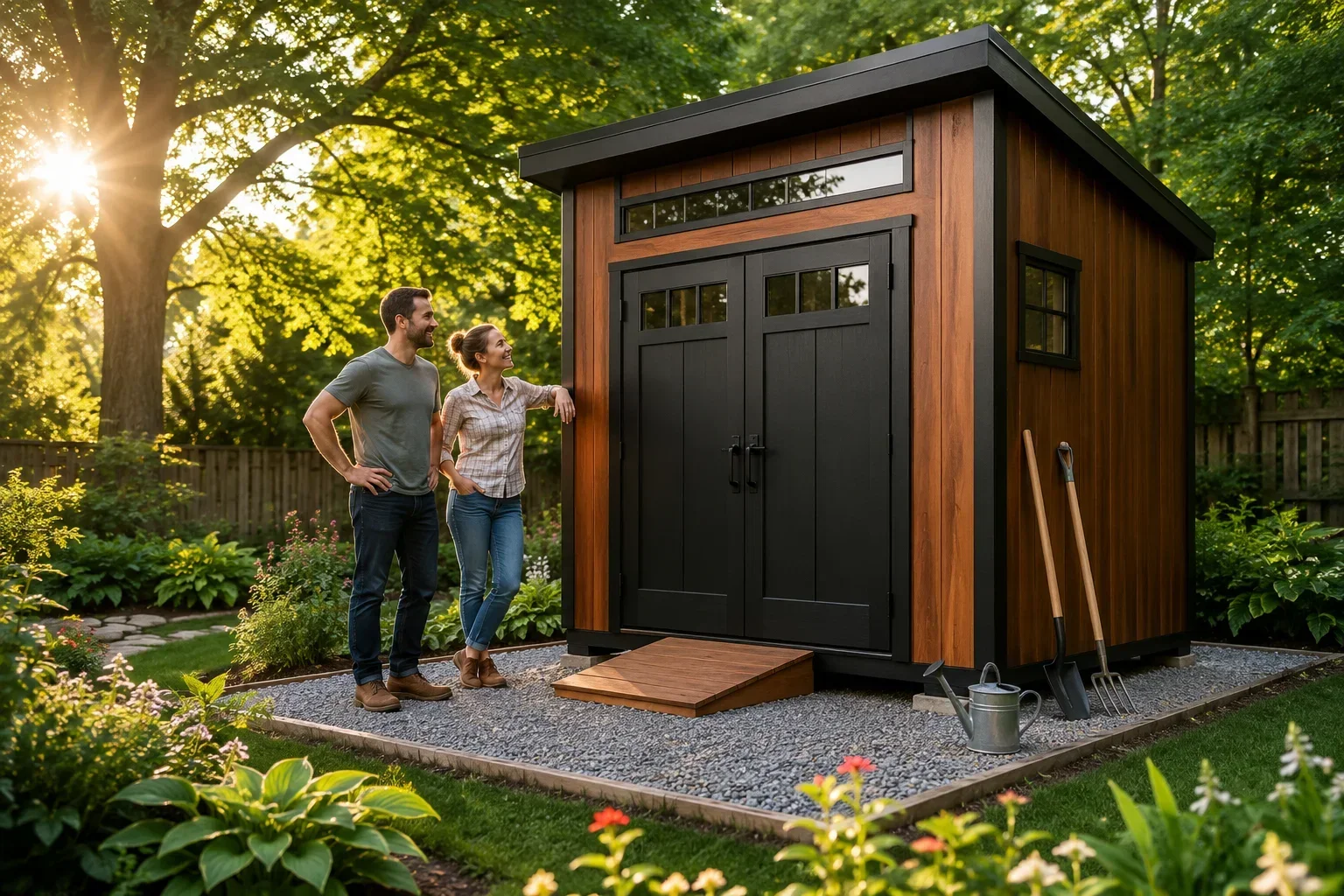
The terms get used loosely, so let's be clear. A backyard shed is a utility-first structure — typically uninsulated, unheated, and built for storage or light workshop use. A backyard cabin is a livable structure, usually with insulation, windows, and sometimes plumbing and electrical.
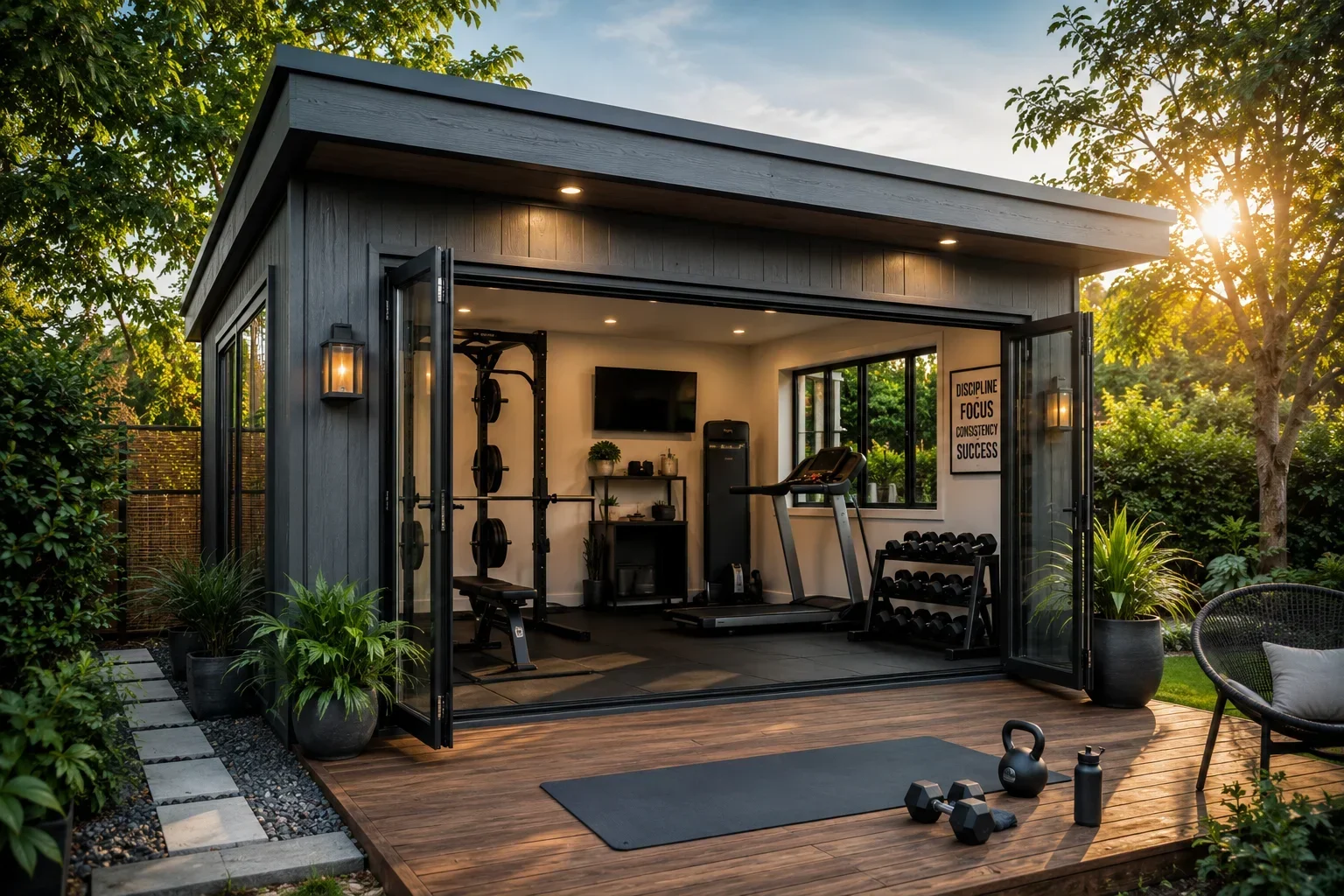
A prefab studio (also called a garden office or detached home office) sits in the middle: it's finished and functional as a workspace or creative room, but not intended for full-time living. All three come in both DIY-kit and contractor-built versions.
Real Cost Breakdown: Modern Shed vs. Prefab Studio Cost (and Everything Else)
Let's start with the number nobody likes to say first: the all-in cost is almost always higher than the advertised price. Here's what the ranges actually look like:
Structure Type |
Price Range |
Typical Size / Scope |
|
Basic storage shed (DIY kit) |
$800 – $5,000 |
60–200 sq ft, no utilities |
|
Mid-grade shed (contractor-built) |
$3,000 – $12,000 |
100–300 sq ft, basic electrical optional |
|
Prefab studio / garden office |
$15,000 – $45,000 |
100–300 sq ft, insulated, finished interior |
|
Custom-built backyard studio |
$30,000 – $80,000+ |
150–500 sq ft, full finish, optional HVAC |
|
Backyard cabin (livable) |
$20,000 – $100,000+ |
200–600 sq ft, plumbing + full utilities |
Sources: HomeAdvisor national cost data 2024; Tuff Shed, Studio Shed, and Kanga Room Systems published pricing.
Hidden and additional costs are where budgets quietly collapse:
List Item |
Typical Range |
Notes |
|
Site Prep / Grading |
$500 – $3,000 |
Required if your yard isn't level |
|
Foundation (concrete pad or piers) |
$1,000 – $5,000 |
Often not included in kit price |
|
Permits |
$150 – $1,500+ |
Varies widely by municipality |
|
Electrical Hookup |
$1,500 – $5,000 |
Running a subpanel to the structure |
|
Plumbing Rough-in |
$2,000 – $8,000 |
Only for cabins; requires permits |
|
AC / Mini-split |
$2,500 – $5,000 |
Essential for year-round use |
|
Insulation (retrofit) |
$500 – $2,500 |
If not included in kit |
|
Interior Finishing |
$1,000 – $10,000+ |
Flooring, walls, lighting, trim |
|
Delivery / Crane Fee |
$300 – $1,500 |
For pre-built drop-off models |
Realistic All-In Example: Mid-Range Prefab Studio
Say you pick a well-reviewed prefab studio at the $22,000 base price. Here's what it actually becomes:
• Base unit: $22,000
• Concrete pad (12x16): $2,400
• Permits: $600
• Electrical subpanel + run: $3,200
• Mini-split installation: $3,500
• Delivery and placement: $800
• Interior finishing (flooring, shelving): $2,000
Total: ~$34,500 — which is 57% more than the sticker price. That's the norm, not the exception.
Why People Are Buying These Now
Three specific shifts are driving this market, and they're not going away:
1. Remote and hybrid work is here to stay. As of early 2024, roughly 22% of U.S. workers worked from home at least part of the time (Bureau of Labor Statistics). The kitchen table was fine in 2020. Four years in, people want a door they can close.
2. Residential square footage isn't keeping up with household needs. The median new single-family home in the U.S. is about 2,140 sq ft (U.S. Census Bureau, 2023) — but many people live in older, smaller homes. A detached backyard structure adds functional square footage without the cost or disruption of a full addition.
3. The used and prefab market has matured. Companies like Studio Shed, Tuff Shed, Modern-Shed, and dozens of regional builders have made it genuinely easier to get a quality structure without hiring an architect. Lead times are still long (8–20 weeks for custom orders), but the product category is no longer niche.

Genuine Advantages — Detached Home Office vs. Backyard Cabin vs. Shed
These aren't vague lifestyle benefits. Here's what actually matters:
1. Physical separation from your house improves how you use the space
Whether it's a home workspace or a hobby room, the walk across the yard does something the closed bedroom door doesn't: it signals a mental transition. Research on remote work consistently finds that physical and psychological separation from the home environment improves focus and reduces work-life bleed (Journal of Applied Psychology, 2021). That's worth something.
2. No interior renovation required
Converting a spare bedroom into a home office means giving something up. A backyard studio adds space without sacrificing what you already have. If you ever want to sell, that bedroom is still a bedroom.
3. Year-round usability is achievable at a reasonable cost
A properly insulated structure with a mini-split heat pump (which handles both heating and cooling) can be comfortable in nearly any climate for an addition of $3,000–$5,000 to your budget. That makes it usable 12 months a year, not just when the weather cooperates.
4. Permitting is usually simpler than a home addition
Most municipalities have a simplified permit process for accessory structures under a certain square footage (commonly 200 sq ft). That threshold varies — check your local zoning before you get attached to a floor plan — but small structures often skip the full structural review process.
5. Flexibility to repurpose as your needs change
Today's home office is next decade's art studio, teenager hangout, or rental income (where ADU rules allow). The structure itself doesn't care. A well-built backyard cabin especially holds multiple use cases over time, which affects long-term value.

Real Downsides — Don't Skip This Section
These are the things brochures leave out:
The total cost surprises almost everyone
A $15,000 studio becomes a $28,000–$35,000 project once you account for site prep, permits, utilities, and finishing. This isn't unique to one builder — it's structural to the category. Mitigation: get a full itemized quote before you commit to anything, and add 15% for unknowns.
Zoning and HOA rules can stop you before you start
Many HOAs prohibit structures over a certain height or within certain setbacks. Municipalities often have their own rules on top of those. Some restrict detached home office use specifically (limiting you from operating a business). Check your county zoning code and HOA bylaws before you spend a dollar on planning.
Lead times are long
For a custom prefab studio, expect 8–20 weeks from order to installation. If you need the space next month, you're looking at a basic shed or an off-the-lot model — which limits your options significantly.
Resale value is real but not guaranteed
A well-built structure adds value. A cheap, poorly finished one can actually raise questions for buyers about what else was done on the cheap. The $3,000 plastic shed you buy for storage probably doesn't add $3,000 in home value.
Year-round use requires upfront investment
An uninsulated shed in a Charlotte summer is a kiln. If you're planning to actually use the space during peak heat or cold, you need HVAC and insulation baked into the plan from day one — not as an afterthought. Retrofitting is doable but costs more.

Does It Add Home Value?
The honest answer: yes, with conditions. A well-built, properly permitted structure that clearly expands the usable space of a home adds value in most markets. The key variables:
• Quality of construction. A finished, insulated studio with electrical adds more than a basic shed.
• Permitted work. Unpermitted structures create headaches at closing — buyers' lenders and inspectors will flag them.
• Utility hookups. Running electricity (and plumbing for cabins) meaningfully increases the utility and perceived value of a structure.
• Your local market. In dense urban or suburban markets where space is tight, an extra functional room is a genuine selling point. In rural markets with large lots, buyers may be more indifferent.
A general rule of thumb from appraisers: a quality backyard studio might return 50–80% of its cost at resale, depending on the above factors. That's not a loss leader — but it's not a guaranteed profit center either.

Who Should (and Shouldn't) Buy One
Good candidates:
• You work from home at least 3 days a week and need a proper, quiet workspace
• You have a clear, consistent use case (workshop, studio, gym) that you've thought through
• You have at least $20,000–$25,000 all-in budget and aren't stretching to get there
• Your lot has room without violating setbacks, and you've verified zoning
• You're planning to stay in the home at least 5 years
Probably not the right move if:
• You're hoping a backyard cabin will double as a rental unit but haven't confirmed ADU rules in your municipality
• You only need storage — a $2,500 shed does that job without a $35,000 investment
• Your lot is tight, your HOA is restrictive, or you haven't checked either of those things yet
• You're buying it as an investment play without a personal use case — the ROI math rarely works out
• You need it now — prefab lead times of 12+ weeks make this a medium-term project, not a quick fix

People Also Ask
What's the difference between a prefab studio and a modular home office?
Functionally, very little. 'Prefab studio' usually refers to a structure built off-site and delivered to your yard as a finished unit. 'Modular home office' often means the same thing but marketed specifically at remote workers. The key distinction to check: is it pre-wired and insulated, or is that extra? [LINK TO RELATED ARTICLE on prefab vs. modular]
Do I need a permit for a backyard shed or studio?
In most jurisdictions: yes, for anything over a certain size (often 120–200 sq ft) or with electrical. Rules vary widely by municipality. Some areas exempt small storage structures; almost none exempt structures with plumbing or electrical from permit requirements. Call your local building department before you order anything — it's a free call and saves enormous headache.
How long does a prefab studio take from order to usable?
For most custom prefab studios, budget 10–16 weeks. That includes manufacturing time, scheduling, site prep, delivery, and any finishing work. Off-the-lot models from local dealers can be faster — sometimes 2–4 weeks. If a company quotes you 3 weeks for a custom order, ask what that timeline actually includes.
What's a realistic budget for a backyard home office?
All-in — meaning structure, foundation, permits, electrical, and basic finishing — a functional detached home office typically runs $25,000–$45,000 for a quality result. You can spend less, but something in that range delivers a space that actually works year-round. Below $15,000 all-in, expect compromises on finish quality, insulation, or usable size.

Final Take
If you need storage: buy a shed. A $3,000–$6,000 contractor-built shed is practical, easy to permit, and doesn't require an existential budget conversation.
If you need a real workspace: a prefab studio is worth the investment — but only if you go in knowing the all-in number, not the sticker price. Get three quotes. Ask about site prep, permits, and HVAC upfront. The $22K studio that becomes $38K is still a good deal if you'd otherwise be paying $700/month for a coworking membership you hate.
If you want a livable space — guest room, rental, ADU: a backyard cabin makes sense, but this is a $50,000–$100,000+ project with real regulatory complexity. It's worth doing properly or not at all.
The thing most buyers don't know: the structure itself is often the cheaper part. It's everything that has to happen before and after delivery that drives the real number. Build that into your plan from day one and you won't have a bad surprise halfway through.
*Never miss a fresh dose of backyard inspiration — new posts are packed with the latest design trends, creative ideas, and practical tips to keep your outdoor space looking its best all year long.

Write A Comment